

Quick Answer
A dental implant procedure involves placing a small, biocompatible titanium post into the jawbone to serve as a permanent artificial root for a missing tooth. The process requires several appointments over three to six months. It begins with a thorough consultation, followed by the surgical placement of the implant under local anaesthetic. Once the implant has securely fused with the jawbone—a healing process known as osseointegration—a custom-made crown is fitted on top. While the treatment requires patience and careful aftercare, it offers a secure, highly natural-looking, and long-lasting solution for tooth loss.
What Are Dental Implants?
Replacing a missing tooth is important not just for the appearance of your smile, but for your overall oral health. When a tooth is lost, the surrounding bone can begin to shrink, and adjacent teeth may shift out of alignment. Dental implants are widely considered one of the most effective and durable solutions for replacing missing teeth, designed to mimic the structure of a natural tooth as closely as possible.
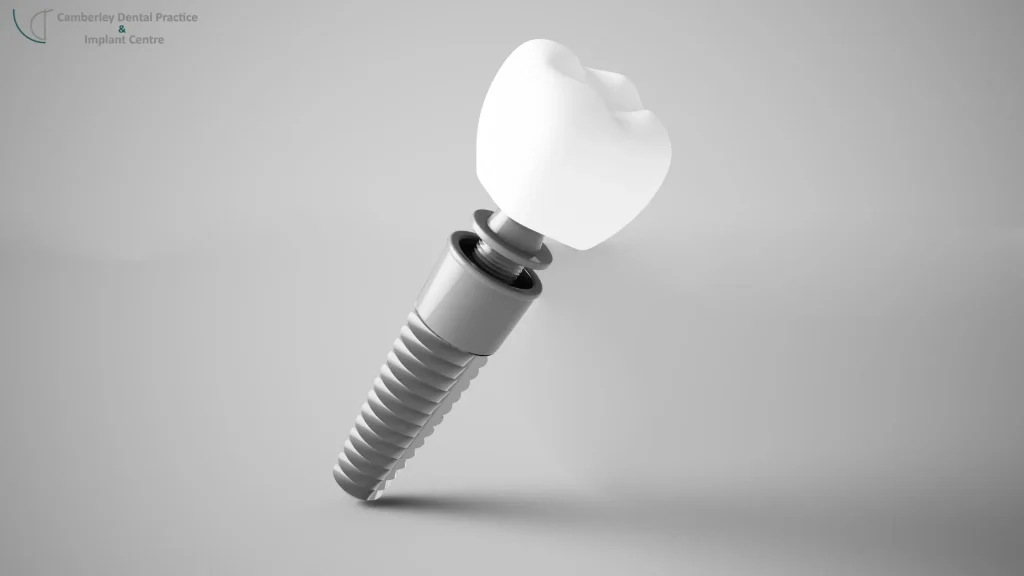
A complete dental implant consists of three main components. First, there is the implant itself, a small screw typically made of biocompatible titanium. This is carefully placed into the jawbone. Second is the abutment, a small connector post that sits on top of the implant. Finally, there is the restoration, which is the visible part of the tooth. This is typically a custom-made ceramic crown. Because titanium posts fuse with your natural bone, implants provide a stable, permanent foundation that feels and functions much like a real tooth.
Who Is Suitable for Dental Implant Treatment?
While dental implants are an excellent option for many people, suitability depends on a variety of anatomical and lifestyle factors that must be carefully evaluated by a professional.
The ideal candidate must have healthy gums and sufficient jawbone density to anchor the implant securely. If there has been significant bone loss due to prolonged tooth absence or severe gum disease, the implant may not have enough support. General health also plays a crucial role. Conditions that affect bone healing can increase the risk of implant failure. Furthermore, lifestyle habits are heavily scrutinised; smoking significantly impairs healing and restricts blood flow to the gums. Your dentist will conduct a thorough review of your medical history and current preventative dentistry habits to ensure that the treatment is safe.
What Happens at a Dental Implant Consultation?
The dental implant process, step by step, begins with a comprehensive consultation. During this appointment, your dentist will examine your mouth, check the health of your remaining teeth, and assess your gums. Advanced imaging, such as digital X-rays or a 3D CBCT scan, is almost always required to view your jawbone and nerve pathways in extraordinary detail.
You will also have the opportunity to discuss your expectations, the estimated timeline, and the dental treatment prices associated with the procedure. A reputable clinician will ensure you are fully informed about the risks, benefits, and alternative options before moving forward.
Before Dental Implant Treatment: What to Prepare
Before treatment, your dentist may ask about your medical history, medicines, smoking, diabetes control, gum health, previous extractions, and expectations. You may need X-rays or a CBCT scan to assess bone volume, nearby nerves, and sinus position. You should also receive a written treatment plan, cost estimate, and explanation of alternatives.
Does Dental Implant Surgery Hurt?
It is completely normal to feel apprehensive about dental surgery, but the dental implant procedure is highly controlled and carefully managed to ensure your comfort. The placement is performed under local anaesthetic, which completely numbs the treatment area. While you will be awake and may feel some pressure or vibration from the instruments, you should not feel any sharp pain during the surgery itself. As the anaesthetic wears off later in the day, it is common to experience some mild, temporary discomfort, which can usually be managed effectively with standard over-the-counter painkillers.
How Long Does Swelling Last After a Dental Implant?
After your implant placement, you can expect some degree of swelling and minor bruising around your gums and face. This is a natural and expected part of the body’s healing process. The swelling typically peaks within the first 48 hours before gradually subsiding over the next three to five days. Applying a cold compress to the outside of your cheek intermittently during the first 24 hours can help reduce inflammation and keep you comfortable while the area begins to heal.
Can I Go Back to Work After Implant Surgery?
Recovery time varies from person to person, but most patients find they are able to return to work within a day or two of having a single implant placed. If you have a physically demanding job or if you have had multiple implants placed alongside a complex bone graft, you may prefer to take a few extra days to rest. It is generally advised to avoid strenuous exercise or heavy lifting for the first week, as raising your heart rate can increase blood flow to the surgical site, potentially causing throbbing or prolonged swelling.
Dental Implant Procedure Step by Step
The procedure usually spans several months, allowing adequate time for your body to heal at each stage:
- Preparation: If a damaged tooth is present, it is extracted. If a bone graft is needed, it is often done during this phase.
- Implant Placement: Under local anaesthetic, a small space is created in the jaw, and the titanium post is securely placed.
- Osseointegration: Over the next three to six months, the jawbone grows around the titanium post, locking it firmly into place.
- Attaching the Abutment: Once fused, a connector post (abutment) is attached to the top of the implant.
- Fitting the Final Crown: Impressions are taken to craft a bespoke crown that perfectly matches your natural teeth, which is then secured to the abutment.
The Reality of the Surgery: What Does the Placement Actually Feel Like?
It is entirely natural to feel anxious about dental surgery, and many patients wonder about the physical sensation of having a titanium thread placed into the jaw. The word “drilling” often sounds intimidating, but the reality is highly controlled and carefully managed.
The surgery is performed under local anaesthetic, which completely numbs the area. While you will be awake, you should only feel pressure and vibration from the dental instruments, not sharp pain.
If your jawbone needs reinforcement to support the implant, a bone graft may be performed. Patients often ask what substance is actually used to grow the jawbone back. Dentists typically use safe, extensively tested biocompatible materials—often highly purified, mineralised bone substitutes or synthetic granules—that act as a scaffold, encouraging your body’s natural bone cells to regenerate and fill the space over several months.
How Long Does Dental Implant Treatment Take?
The treatment process typically spans three to six months. This duration allows for the surgical placement of the implant and the necessary healing time for osseointegration, where the jawbone fuses with the titanium post.
Dental Implant Treatment Stages and Timelines
| Stage | What Happens | Typical Timing |
| Consultation | Exam, X-rays/CBCT, medical history, treatment plan | First appointment |
| Prepararation | Extraction, gum treatment, or bone graft if needed | Before or during implant planning |
| Implant placement | Titanium post placed under local anaesthetic | Surgical visit |
| Healing | Osseointegration, as bone stabilises the implant | Usually 3–6 months |
| Abtument/ Crown | Connector and final crown fitted | After healing |
When Should You Contact the Dentist After Implant Treatment?
You should contact your dentist if you experience signs of infection, persistent or worsening pain, or concern about your healing progress. It is important to report any issues that deviate from your dentist’s post-operative instructions, particularly regarding the health of your gums and the stability of the implant.
What Questions Should You Ask Before Starting Dental Implant Treatment?
Before beginning treatment, consider asking your dentist the following questions:
- What are the specific risks and benefits associated with the procedure in my case?
- What is the estimated timeline and number of appointments required for my treatment?
- What are the total costs associated with the procedure?
- Are there any alternative tooth replacement options that would be suitable for me?
- What can I expect during the recovery period, and what should I avoid eating or doing?
Long-Term Aesthetics: Will the Implant Always Match My Natural Teeth?
A common concern for patients looking decades into the future is whether an artificial tooth will start to look obvious as they age.
It is important to understand that the ceramic or porcelain used for your implant crown does not respond to staining or bleaching in the same way natural tooth enamel does. If your natural teeth yellow over time due to age, tea, or coffee, the implant will retain its original, brighter shade. Conversely, if you whiten your natural teeth, the implant will not lighten. Maintaining a consistent oral hygiene routine and discussing any future teeth whitening plans with your dentist before the final crown is colour-matched is crucial.
Another long-term aesthetic consideration is the health of your gums. If you develop gum disease and lose bone density around the implant later in life, the gums can recede. This recession can occasionally expose the metal base of the implant or create visible “dark triangles” (empty spaces) between the teeth. Impeccable gum health is the secret to keeping an implant looking perfectly natural.
What Can You Eat After Dental Implant Treatment?
For the first 24 to 48 hours following surgery, stick to cool, liquid, or very soft foods like soups, smoothies, and mashed potatoes. Avoid using a straw, as the suction can disturb the healing tissue.
As your gums heal over the next week or two, you can gradually introduce slightly firmer foods. However, you should strictly avoid hard, crunchy, or extremely chewy foods until your dentist confirms that the bone has fully fused to the implant. Chewing too forcefully on the implant site prematurely can disrupt the healing process.
How Should You Look After Dental Implants?
Simply having an artificial tooth does not mean you can neglect your oral hygiene. While the implant itself cannot decay, the gums and bone surrounding it are vulnerable to bacterial infection, a condition known as peri-implantitis.
You must maintain an impeccable routine, including brushing twice a day with a fluoride toothpaste and carefully cleaning around the implant using interdental brushes. Regular visits to a dental hygienist are essential. The General Dental Council strongly advocates for routine professional dental care to maintain patient safety and the long-term success of complex treatments.
What Are the Risks of Dental Implants?
Dental implants have a remarkably high success rate, but like any surgical procedure, they do carry a small degree of risk. Potential complications include infection at the implant site, minor damage to surrounding teeth or blood vessels, and nerve damage, which can cause temporary tingling or numbness in your gums or lips. There is also a slight risk that the titanium post may fail to fuse properly with the jawbone (a process called osseointegration). Your dentist will meticulously plan your treatment using 3D imaging to minimise these risks, though factors such as smoking or uncontrolled diabetes can significantly increase the chances of complications.
Frequently Asked Questions (FAQs)
Are dental implants safe?
Yes, dental implants are a safe, well-established treatment used by dentists worldwide, with a very high success rate when placed by trained professionals and maintained properly.
Can I get dental implants on the NHS?
According to NHS guidance on dental treatments, dental implants are rarely available on the NHS unless there is a severe medical need, such as reconstructive surgery following oral cancer. Standard NHS care usually provides dentures or bridges.
How long do dental implants last?
The titanium post can last a lifetime if integrated successfully. The crown placed on top experiences daily wear and tear and may need replacing after 10 to 15 years.
Ready to Restore Your Smile?
Replacing missing teeth is a significant decision, but understanding the steps, sensations, and long-term realities can make the journey much less daunting. Dental implants offer a durable, natural-looking solution that can restore your confidence. If you are considering tooth replacement and want to explore your options with an experienced team, we are here to guide you. Book your new patient consultation online with Camberley Dental Practice today to take the first step towards your new smile.